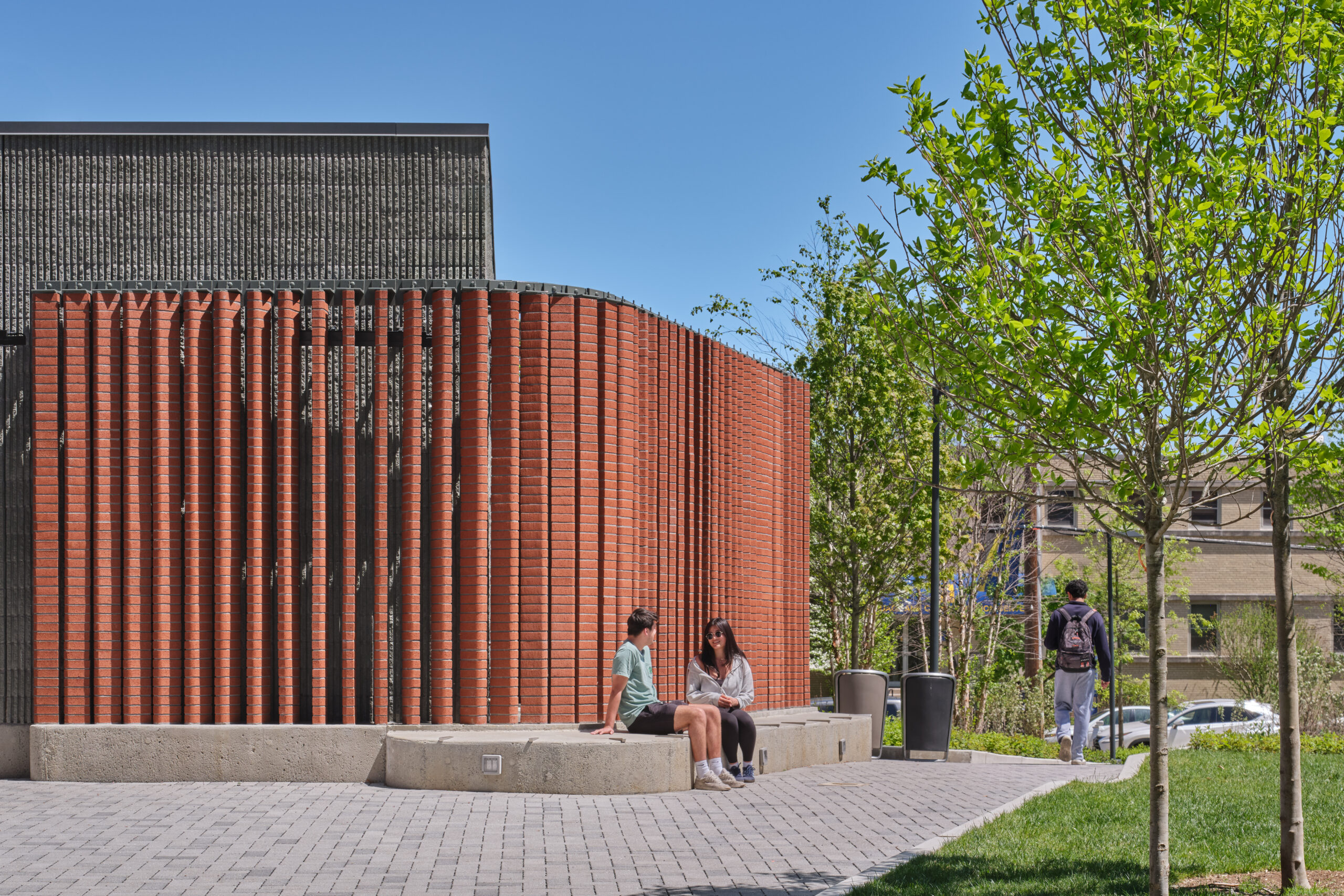
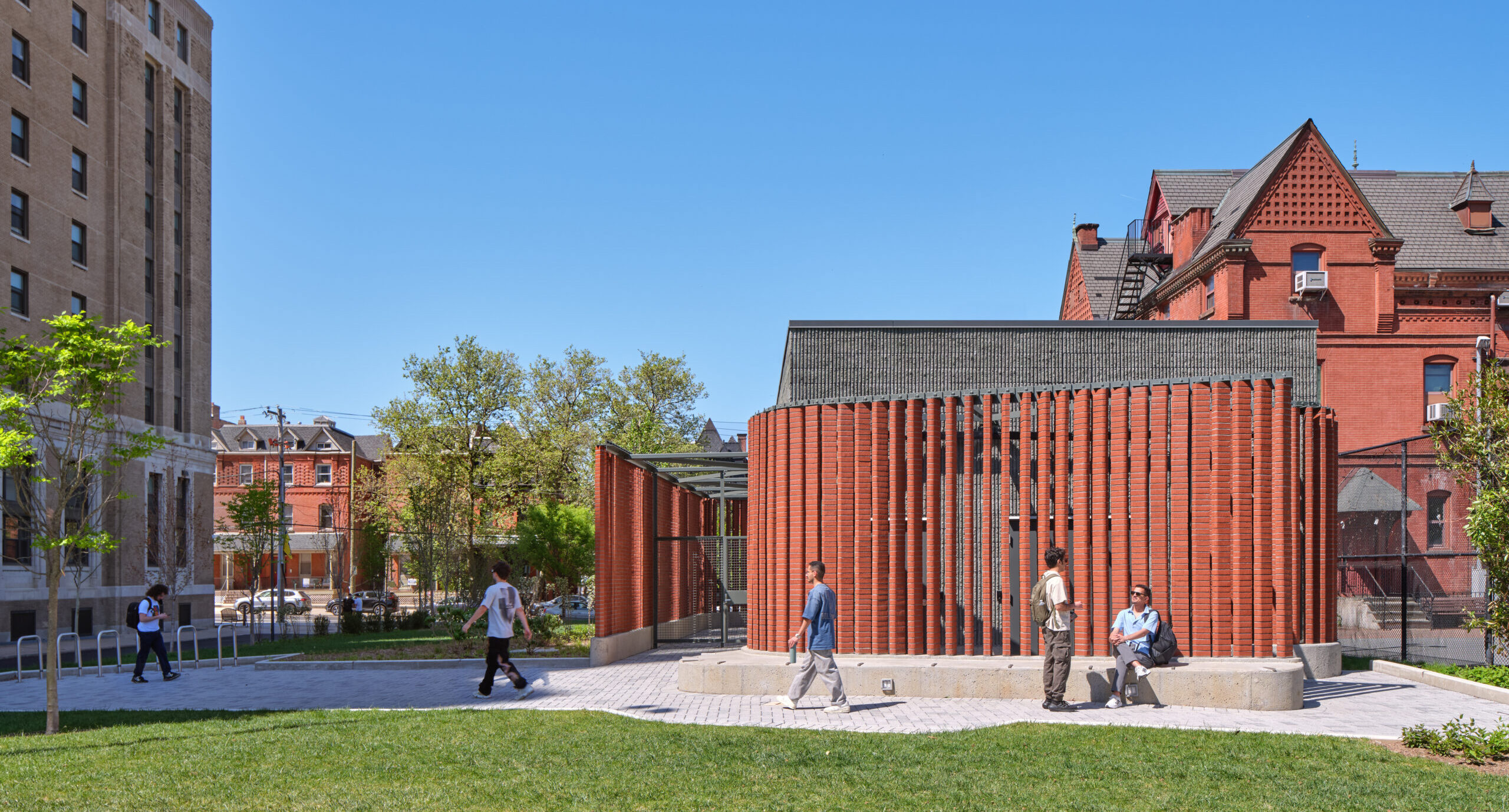
At first glance, the Myers Switchgear building at Drexel University looks like a simple brick structure.
But its façade belies a complex design involving post-tensioning brick, an unusual type of masonry where steel bars or tendons are inserted into walls and tensioned after the mortar has cured.
“It looks relatively simple in its expression, but there was a lot of very complicated components that had to come together to create that expression,” said Eric Oskey, Partner and Technical Director for Moto Designshop, the project architect.
The Myers Switchgear building is at the site of a former Drexel dorm constructed in the 1970s. The dorm, Myers Hall, was demolished in 2024 to make way for a “front lawn” for Drexel students. The space includes the building that holds a switchgear for the area’s power system.
Last year, the Brick Industry Association (BIA) awarded Myers Switchgear its Best in Class award in the Education—Colleges and Universities category.
“The Myers Hall Switchgear building at Drexel University transforms a purely utilitarian facility into a refined architectural feature,” the BIA said. “Designed to preserve critical electrical systems while supporting the campus’s largest new lawn, the project uses compact planning, careful siting, and a sculptural masonry screen to enhance its surroundings. What began as a simple utility shed became a distinctive campus landmark that balances function, context, and aesthetics, reinforcing Drexel’s commitment to thoughtful design and placemaking.”
BAC signatory contractor General Masonry and Restoration and Moto Designshop both reached out to the International Masonry Institute (IMI) for guidance on post tensioning brick, said Casey Weisdock, IMI Regional Director of Industry Development and Technical Services.
“It’s not a common design you encounter, but the architect had done the research and felt really confident about it,” she said. “We had a strong relationship with the Moto team and have worked with them a lot on a variety of different projects.” One such project was a boundary-pushing curved screen wall at St. Joseph’s Arrupe Hall, which won IMI’s JBC Masonry Innovation Competition, among other awards.
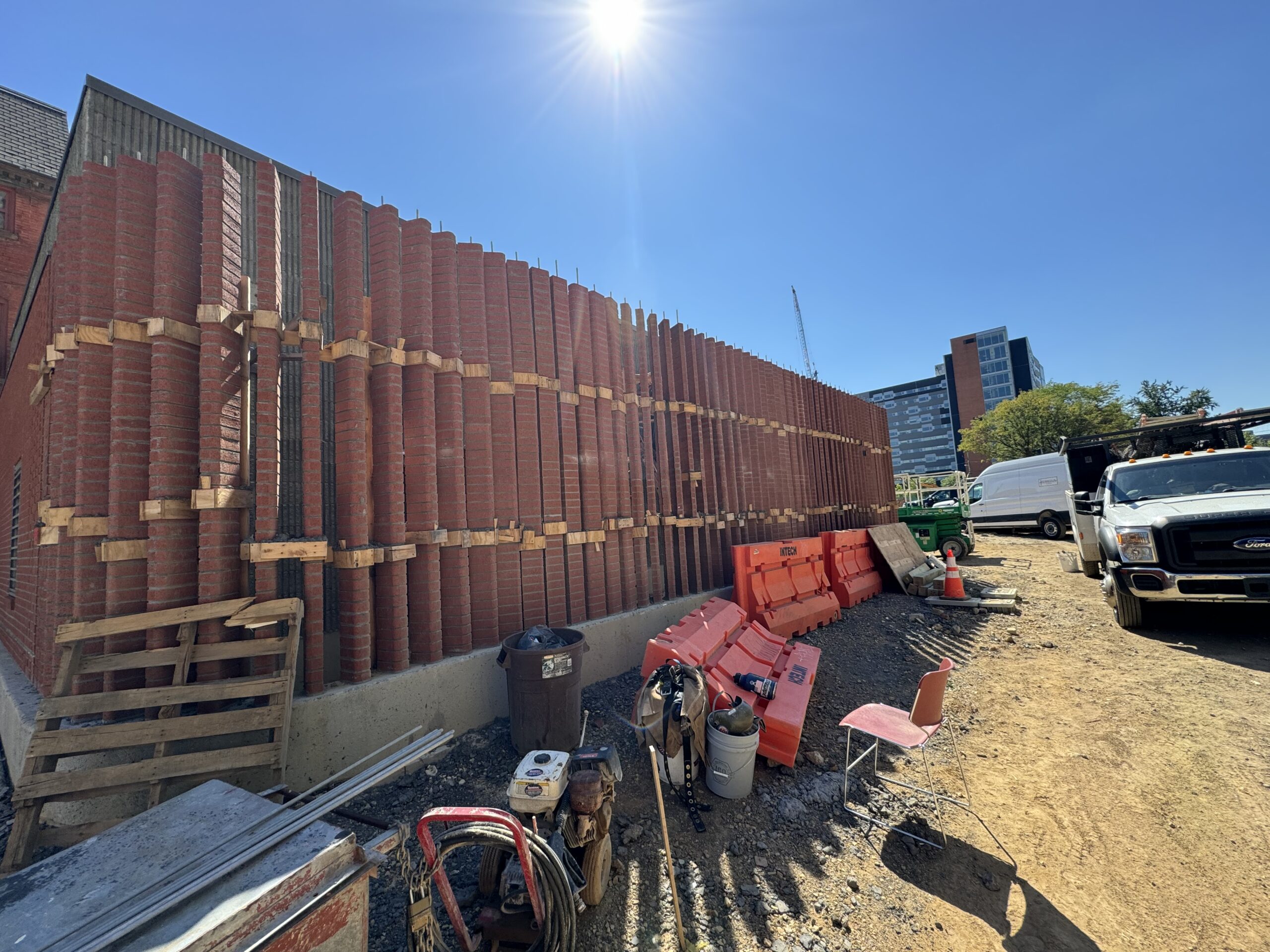
The brick screen design at Drexel consisted of 11.5-foot-tall brick columns, Oskey said.
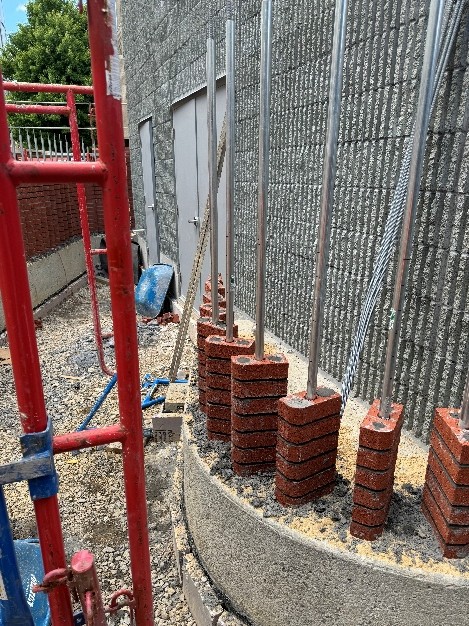
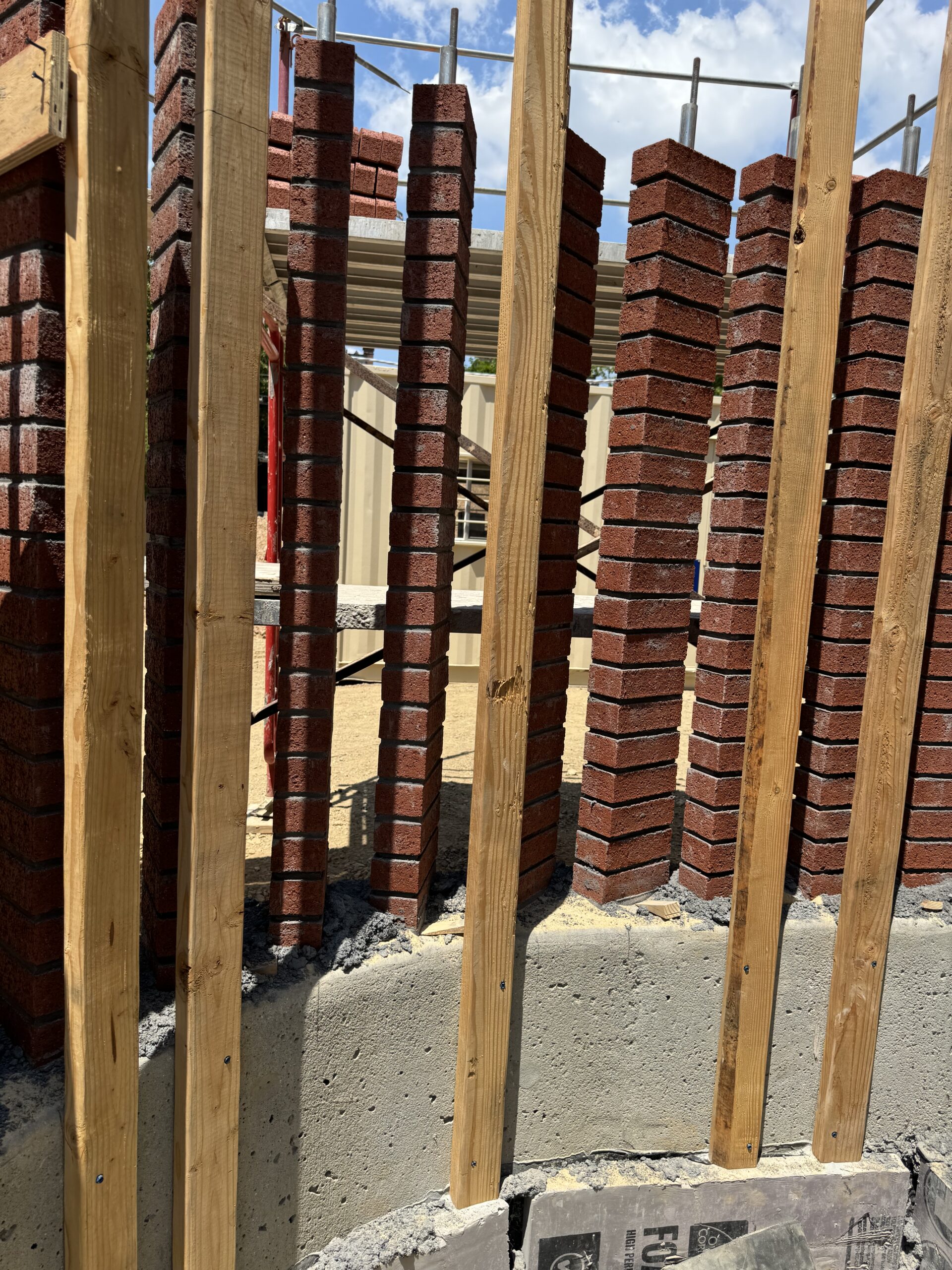
“We did not want to have visible structural supports behind or in front of the brick to hold it in place, so we approached it through hidden structure,” Oskey said. “Our approach was to imbed threaded rods within the cavity of the brick and then to post tension. This created substantial compression that allowed for the brick columns to have proper lateral strength.”
The extent of the vertical cantilever and post tensioning of 11.5 feet wasn’t something Moto Designshop had seen before in the U.S., Oskey said.
“This created a challenge to convince the engineer, construction team and client that this was feasible,” he said.
That’s where the team at IMI came in, providing technical advice and recommendations on the types of brick and mortar to use, along with recommendations on construction detailing.
Chris Aaron, the owner of General Masonry, said working with any type of masonry in a stack bond pattern is difficult because of the lack of interlocking bonding.
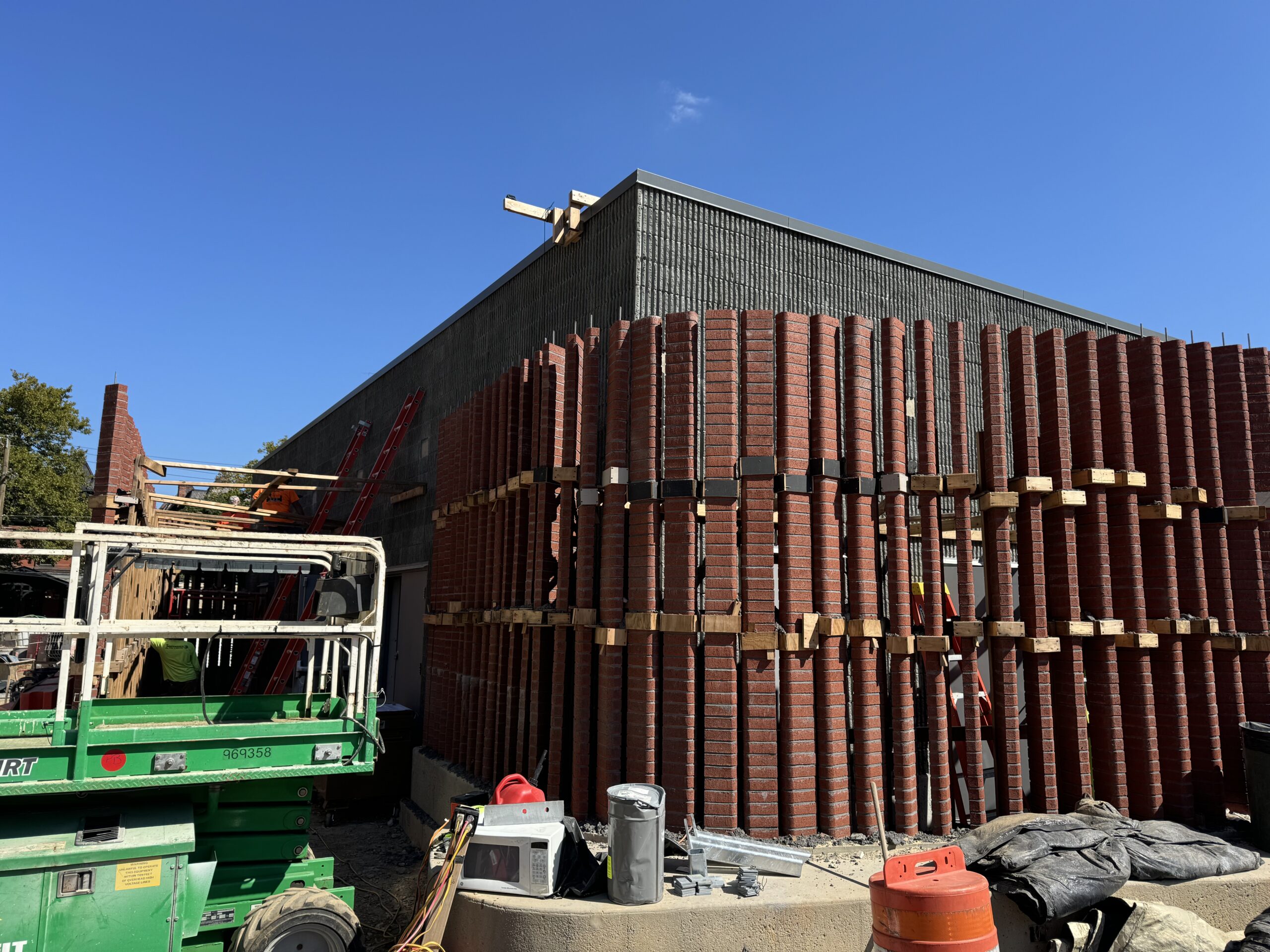
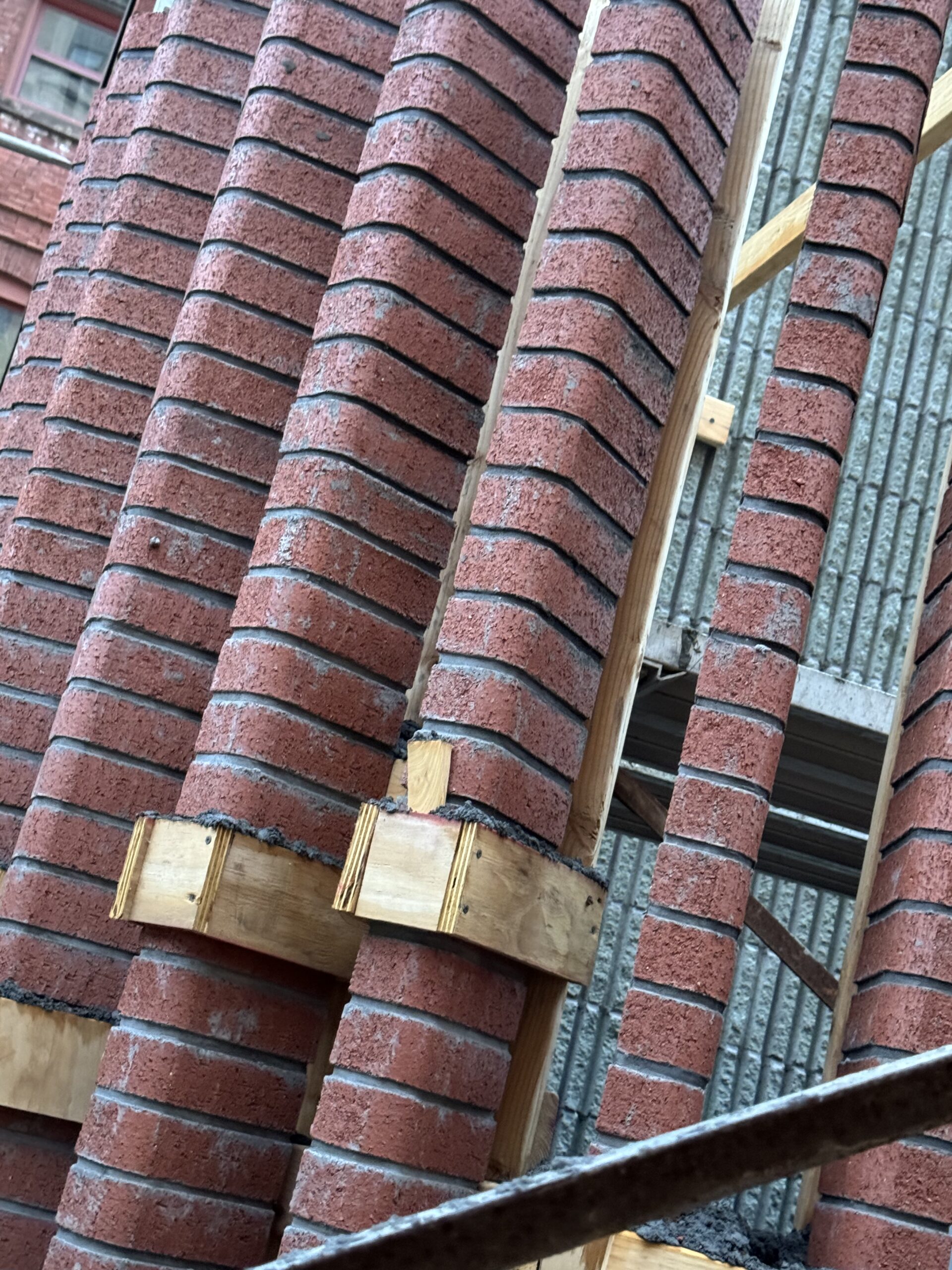
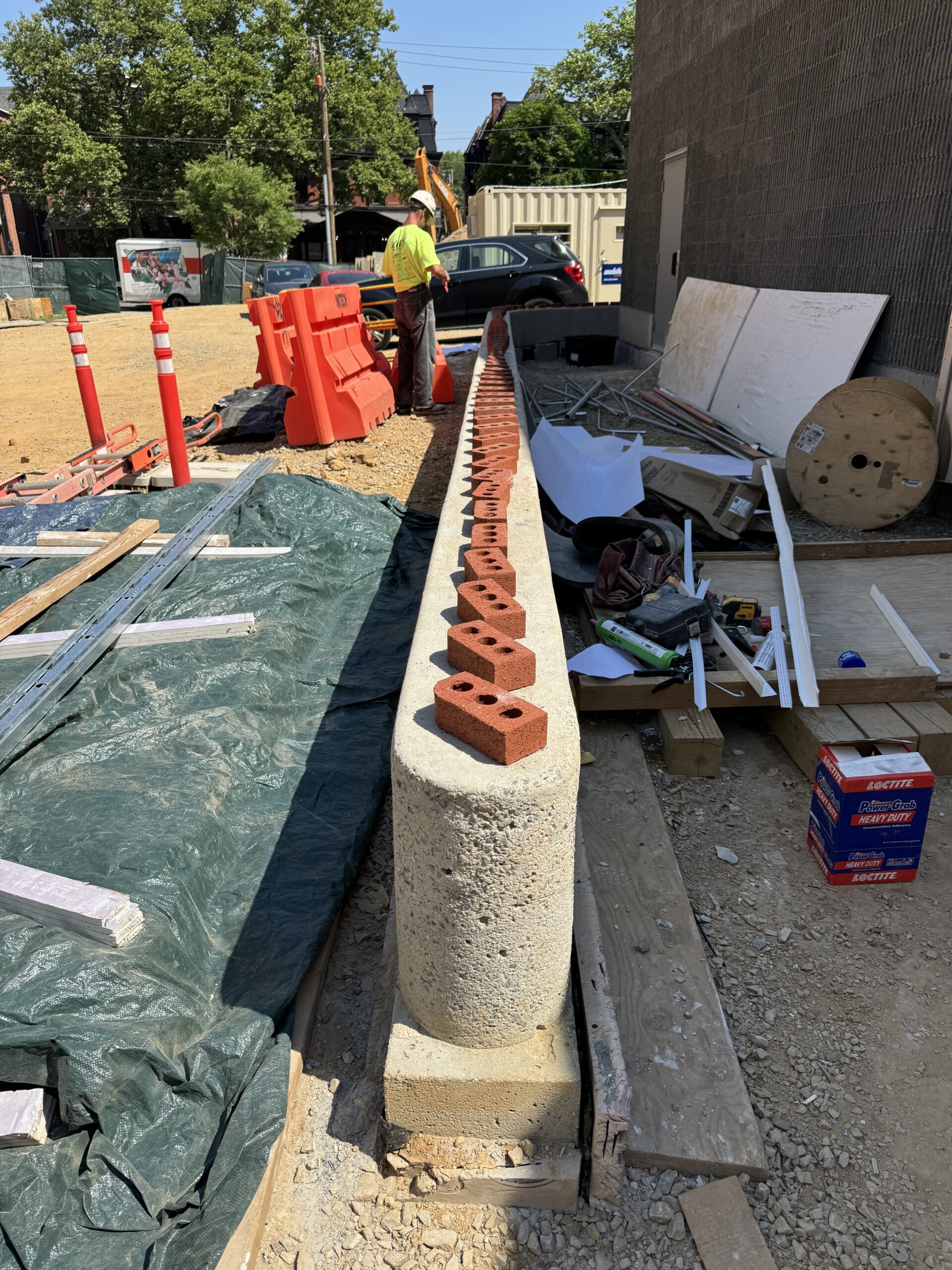
“What makes this design even more difficult was the fact the units were a single stack brick. To keep the piers from moving during the construction, form work had to be built to keep the piers stable,” Aaron said. “In addition to the laying of a single stack brick, which had three cores, we installed in the center core a galvanized sleeve over the thread rod that would be utilized in post tension. The other two cores were filled in solid. To our knowledge, this was the first time a single stacked brick would be built in this system.”
The crew built a pre-construction mockup to show the design and construction teams that there would be stability after post tensioning.
“With IMI’s input, I believe it gave the team confidence the system we mocked up would perform as intended,” Aaron said. “Looking at the building, the workmanship and attention to detail stand out the most, with each single stacked pier turning 10 degrees from the pier next to it as they move around the building.”
Oskey said he was thrilled with the masons who helped bring the project to life.
“The quality of the final result is excellent, and they provided industry recommendations on staging and layout as well as proposing a wood scaffolding system to hold the brick columns in place until they were post tensioned,” he said.
That part proved to be the biggest challenge, said Paul Seavey, project foreman and member of BAC Local 1 Philadelphia.
“I was very skeptical of it in the beginning,” said Seavey, who’s been a bricklayer for 30 years. “Never in my life have I worked on a project like this.”